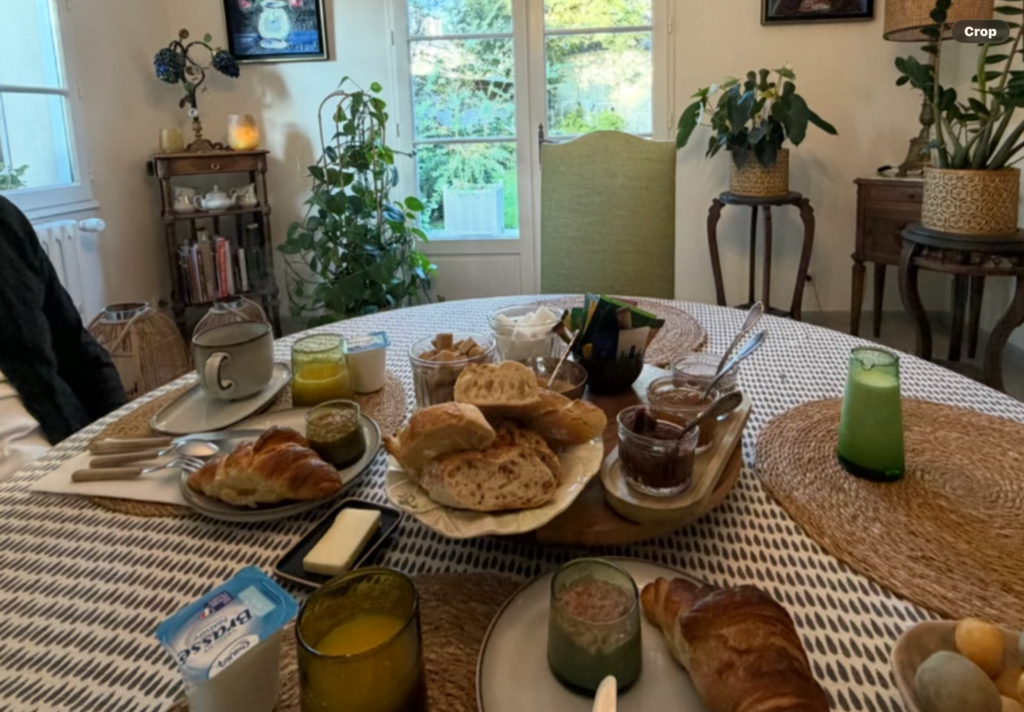
Our breakfast at Le Petite Matin B&B in Bayeux was a classic French bed and breakfast experience. We were guided by our host to the smaller dining room looking out on the back terrace. The round table was set with croissants, breads, yogurt, chilled oatmeal, a choice of jams, butter, chilled orange juice and coffee cups ready for the hot coffee. Even a bowl of fresh plums. The setting was out of a magazine and our hosts were very accommodating, even setting the large barking dog free for us to pet when we requested. After a relaxing breakfast we had a short tour of the downstairs rooms and headed up to our room to pack up and make ready for the day.
Our original plan was to complete the D-Day sites in one day then proceed the next day to Mont Ste Michele, the iconic island, village set on a rocky outcropping with an abbey/church crowning the top, surrounded by shops, inns, and restaurants on pathways that wind around the Mont which terminates at the abbey on the crest. It is one of the most popular tourist sites in France and one of the most recognizable images in the world. The island sets off shore and the sandy area around it is walkable at low tide. When the tide comes in the water completely surrounds the island which is always accessed through the slightly elevated causeway from the mainland. Everyone parks on the mainland and either walks or is shuttled to the island. We originally considered spending a night in one of the inns. That plan changed from an overnight to a day trip and eventually the visit was entirely canceled when we had to delay the stop at the American Cemetery until the next day.
We retraced our drive back to the coast and pulled into the cemetery parking lot and proceeded to the cemetery’s visitor center. Admission and parking are free. Unlike the previous day, this day’s weather was beautiful and sunny. One could hardly imagine it to be the site of so much carnage and sacrifice so long ago. In the Visitor’s Center We spent almost a full hour viewing the various displays, vintage photographs, memorabilia and videos describing the battles of D-Day and specifically the Omaha and Utah beach battles which were fought by Americans. There were five beaches that were the point of attack that day, the American forces came on to Utah and Omaha beaches, plus The Rangers fought at Point du Hoc overlooking both beaches. These were the southern most beaches. Just to the north was Gold beach where British troops landed then north of that Juno Beach which was the landing site for Canadian troops. The northern most beach, Sword, was where the remaining British troops came onto the beach. The visitor center provided an excellent retrospective to the entire area. It ended with tributes to those who sacrificed their young lives over several days during the battle of D-Day.
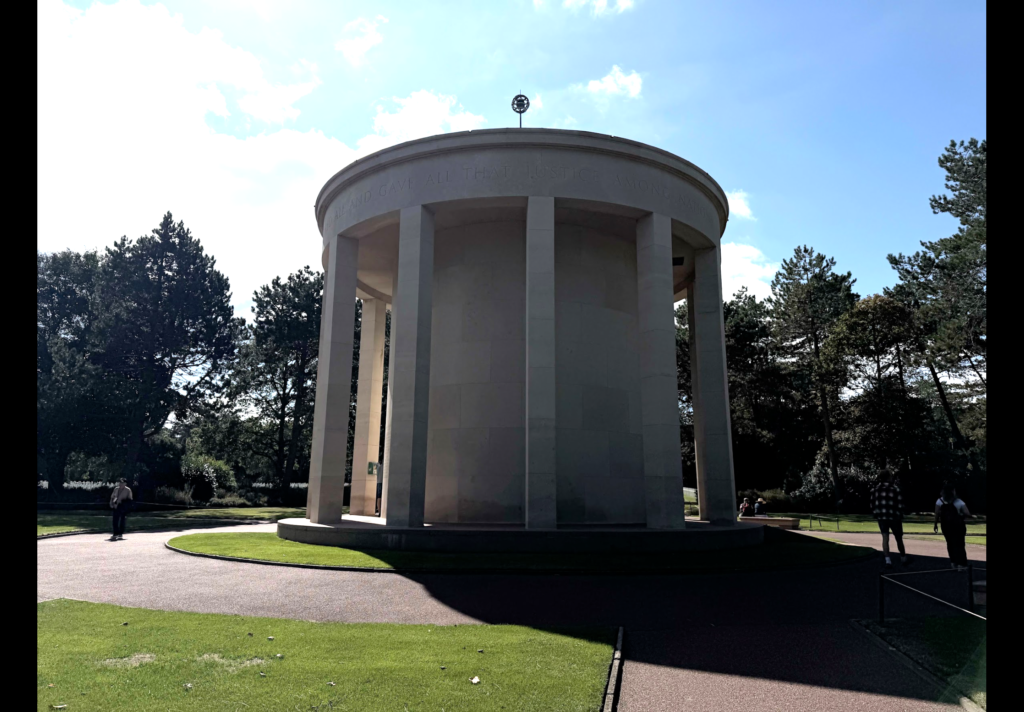
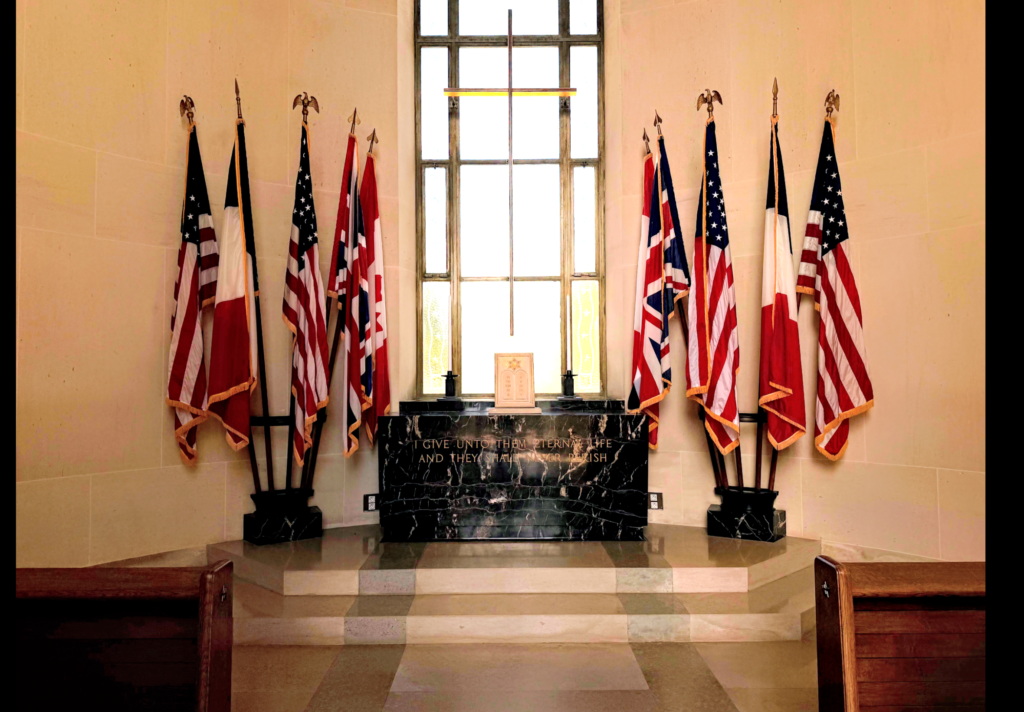
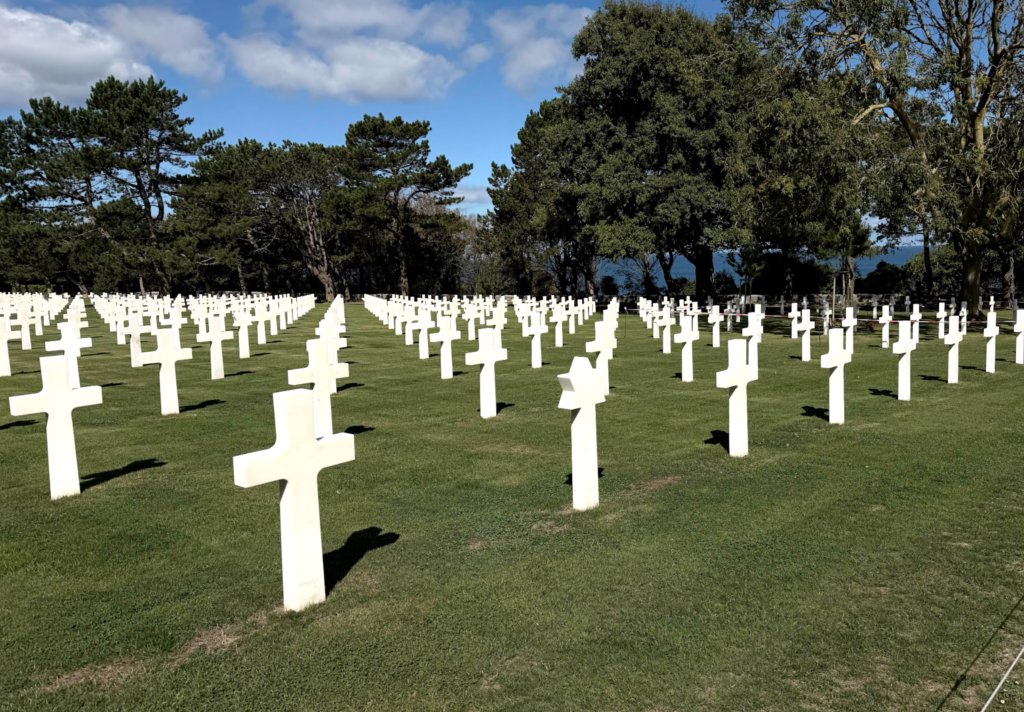
The exit to the visitors center leads out to the grounds of the cemetery where we walked along the promontory path with the rows of crosses and Star of David tombstones to our left in precise rows up the gentle slope and the view out over the beach and the ocean on the right. The view from the cemetery over the Atlantic Ocean from the elevated cemetery was so serene. Farther up one could almost imagine that the rows of tombstones were marching over the sloping hill toward the sea. There are two memorials in the cemetery, one in the center and a larger one as you exit. It had been a visit we had discussed for many years and we were not disappointed. It is hard to imagine a more fitting tribute to such a consequential place in the history of the world. One we will always remember.
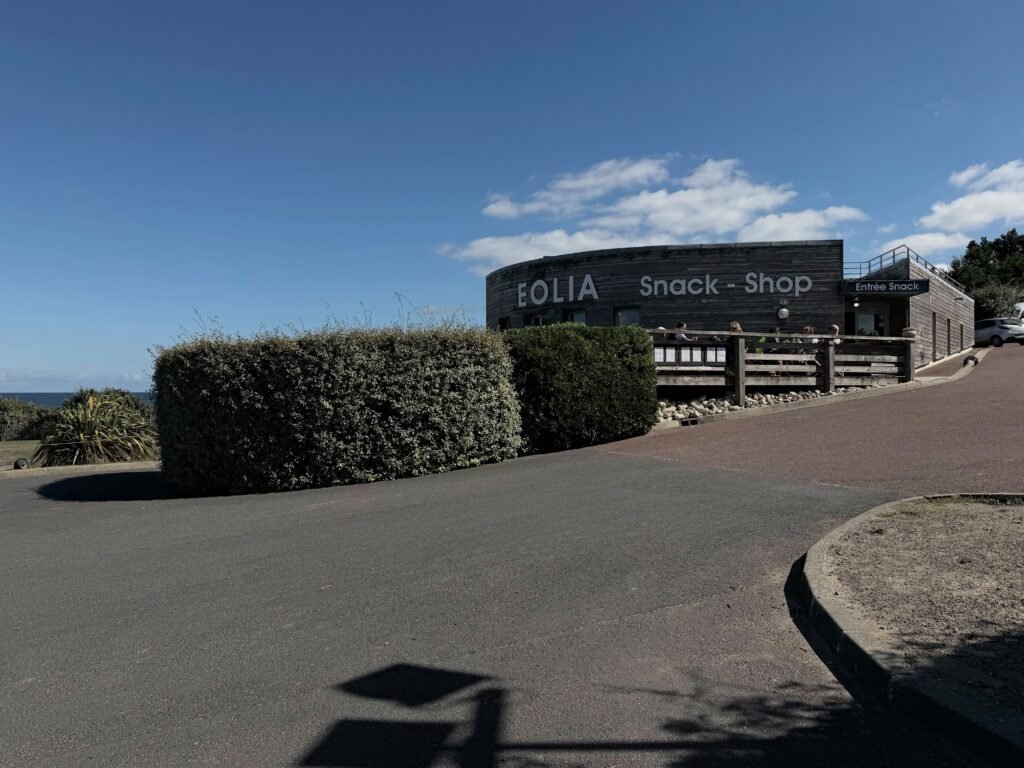
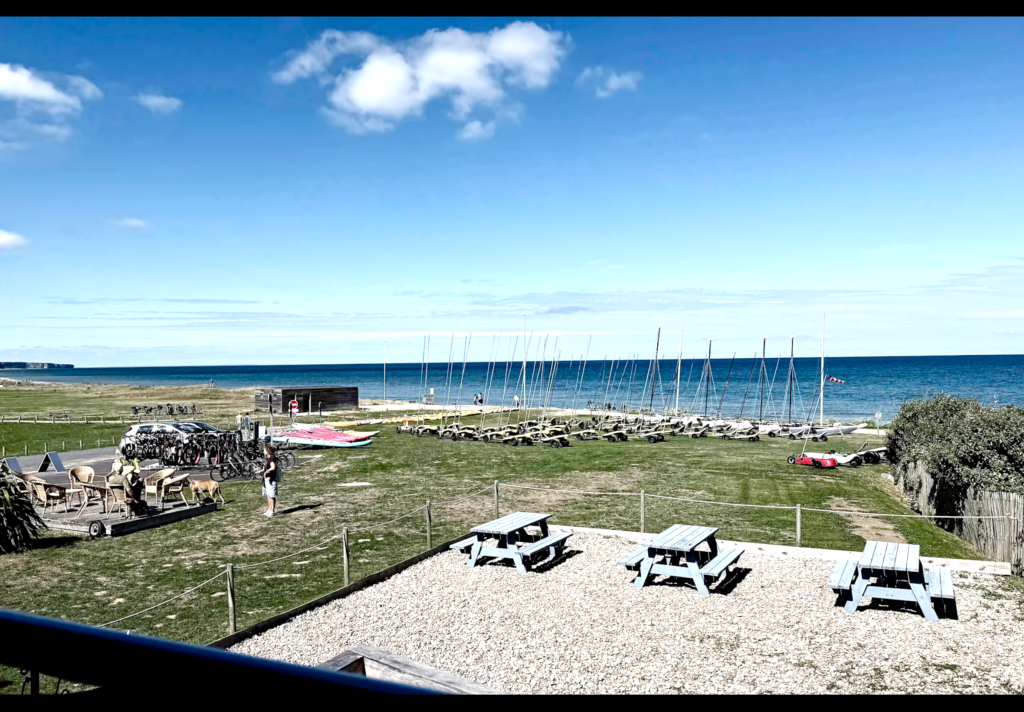
Back in our car, we exited the parking area and found a winding, narrow road that took us down to an area down on Omaha beach that we had spotted yesterday. There was a hotel, a snack shop and outdoor rental shop for kayaks, sailboats and other equiptment. Inside the snack shop we ordered lemonades and two Croque Monsieurs, ham and cheese sandwiches topped with Béchamel cream sauce and cheese then toasted. We took our drinks to a narrow veranda with a long counter top and seats looking out over the beach and ocean. We had previously enjoyed the “Croques” as they are sometimes called, on the beach at Nice on a Mediterranean cruise a few years ago and they were a welcome treat.
After lunch we took a short walk closer to the beach likely for the last time. There were tourists and a young group of kayakers lining up for the day’s adventures on that beautiful beach with calm waves lapping the shore. It was time to return to our car and find the main highway to take us to our next destination, Bloise, a medieval village on the Loire River some three hours drive away. We couldn’t help but silently reflect on what we had seen on these two days during that drive.
Much has been written about that day, history books and articles published and movies have tried as best they can to portray the horror, the bravery and sacrifice those young men faced on that fateful day. On June 6, 1984 Ronald Regan stood on the very cliffs that those Rangers fought and died on to give a speech commemorating the fortieth anniversary of that day. His words said it best:
“The Rangers looked up and saw the enemy soldiers — at the edge of the cliffs shooting down at them with machine-guns and throwing grenades. And the American Rangers began to climb. They shot rope ladders over the face of these cliffs and began to pull themselves up. When one Ranger fell, another would take his place. When one rope was cut, a Ranger would grab another and begin his climb again. They climbed, shot back, and held their footing. Soon, one by one, the Rangers pulled themselves over the top, and in seizing the firm land at the top of these cliffs, they began to seize back the continent of Europe. Two hundred and twenty-five came here. After two days of fighting only ninety could still bear arms.”
“These are the boys of Pointe du Hoc. These are the men who took the cliffs. These are the champions who helped free a continent. These are the heroes who helped end a war…..You were young the day you took these cliffs; some of you were hardly more than boys, with the deepest joys of life before you. Yet you risked everything here. Why? Why did you do it? What impelled you to put aside the instinct for self-preservation and risk your lives to take these cliffs? What inspired all the men of the armies that met here? We look at you, and somehow we know the answer. It was faith, and belief; it was loyalty and love”.