13 September Sunday 2026, Blois France, Sleeping In the Salt Attic Loft
The drive from Omaha Beach to Blois, our next destination, was easy and beautiful. Almost all of the roads in France are will cared for and the major highways make for a nice drive. After visiting the American Cemetery and having lunch at a seaside cafe at Omaha Beach, we drove the narrow backroads to find the highway to Caen and on to Blois, pronounced blah, our next destination
We were heading into the Loire River Valley known as the “Garden of Paris”. The village rests along the banks of the mostly unnavigable Loire River. Around five hundred years ago, the kings and nobility in Paris established numerous large chateaus for summer retreats. We decided that Blois, the site of its own chateau, would be a good base for visiting the chateaus and an interesting village to see as well. On the road, we needed to make our first stop for gas. There are rest areas with services, gas and food, that are easy to access and to return to the highway. The gas pump had almost four options for regular gas all labeled in French. We had seen that a debit card was needed to pay at the pump. When that was rejected we walked inside for help but no one spoke English. I returned to the pump and was happy to see our credit card was accepted for payment, but what grade to select. I picked a nozzle and soon realized that our car had a label on the gas cap telling us which two were acceptable. Crisis averted. On we went to Blois
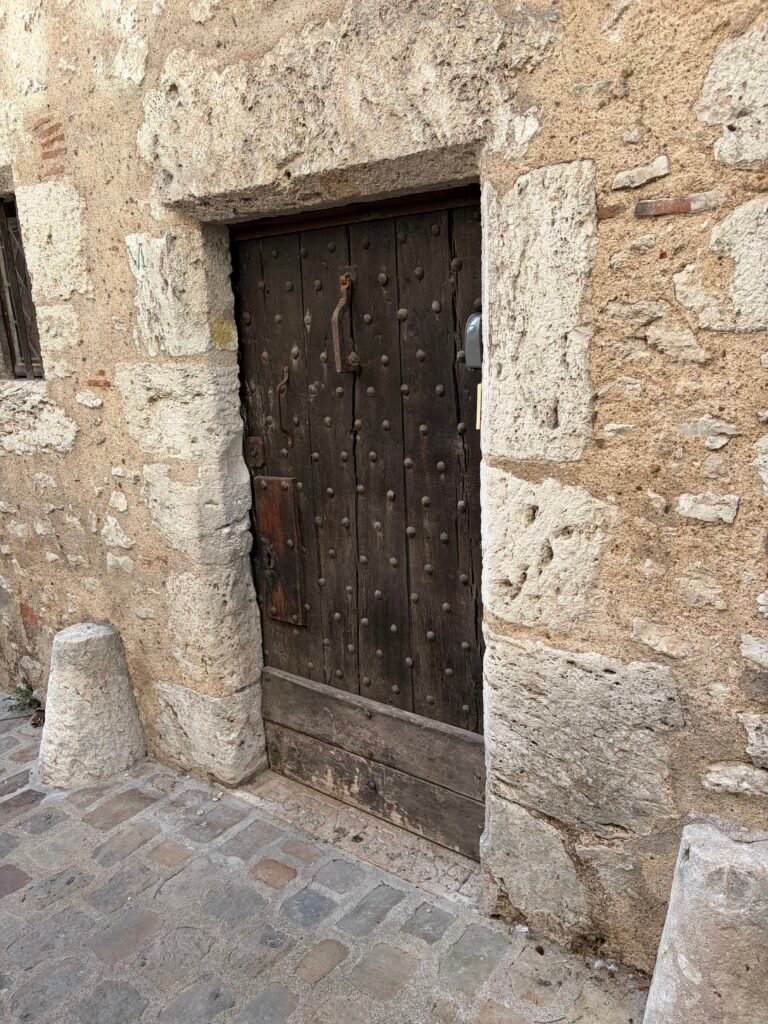
We were running late for our anticipated arrival and our host Jon Marc, had been anxiously messaging to see when we would arrive. Just as we were exiting the highway and heading into town, the host impatiently messaged us that we had given up and was leaving the code to the key box and we were on our own. Our destination is in the center of town but we could not drive up to it so we parked in a lot on the river and walked to the address. As we turned a corner onto our alley, a man walking by us exclaimed with a French accent, Artur! Fortunately we caught him leaving and he showed us to the address and let us in. He gave us a tour and explained a few things before leaving. We moved our car closer to the address and started to the location pulling our bags. It took about five minutes to get the ancient door unlocked and we made our way inside.
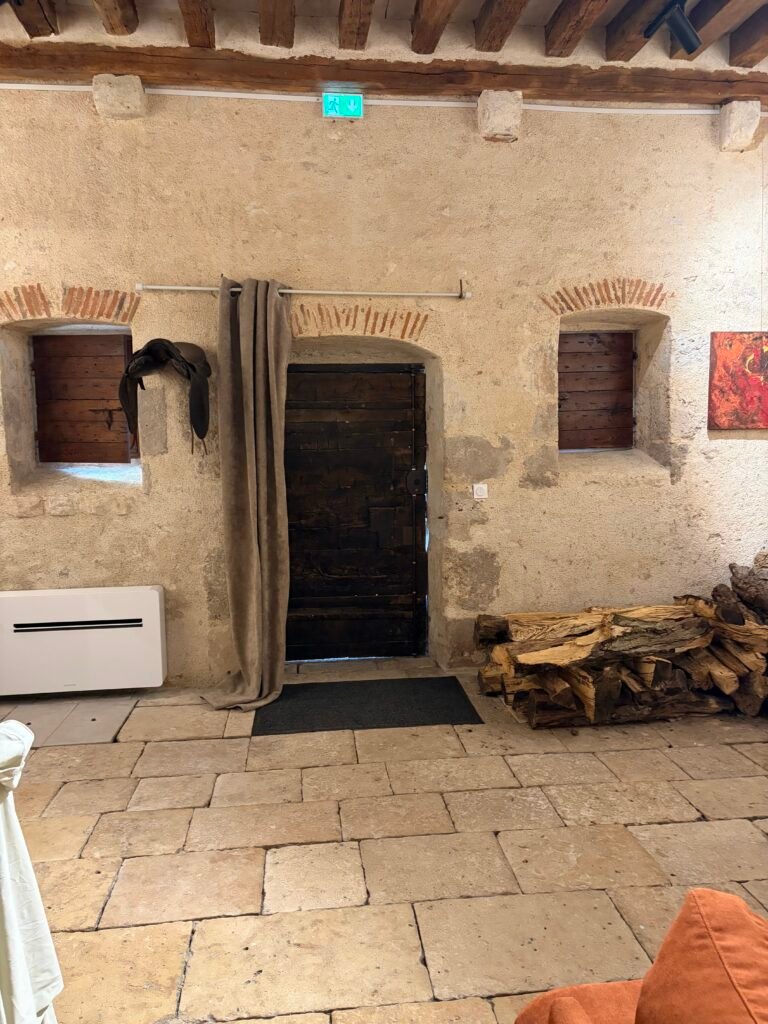
In the 1500s salt was a legal currency, its value was derived because with no refrigeration, the salt was needed to preserve food for the winter. Realizing this, the officials and the king taxed the salt as a source of revenue. The salt attic we were staying in stored the salt and it was dispensed from there. The building eventually fell into disrepair and was even used as a roofless dump for years until a skilled tradesman bought it, replaced the roof and used heavy timber to restore the inside which included two sleeping lofts with winding staircases. There was a modern bathroom with shower and serviceable kitchen area but you knew that you were in a medieval building for the next two days.
After settling in we retraced our steps back to where we had passed a few eating establishments on the way to find our B&B to find one for dinner. We stopped at the first one we came to, simply named Diffa, and took an outside table. We were greeted by the server, a tall young man named Quentin who greeted us, gave us menus and took our drink orders, wine and gin with tonic. Quentin was a one man show, greeting, seating, and waiting tables. It was soon obvious it was his cafe. He explained the chalkboard menu with limited options in written in French for us. Janet ordered a local sausage with mashed potatoes and I ordered the white fish. The meal turned out to be delightful. The sausage was made in house with freshly whipped potatoes. My fish was presented on a bed of roasted leeks and carrots garnished with light greenery. The dessert were equally good but I don’t recall what they were. This turned out to be one of the better meals of the trip. I would love to share some pictures, unfortunately, the camera on my newly purchased IPhone stopped working and began to take only darkened images, at least the videos worked well.
For our travels, I book a wide variety of options for our stays. From expensive Hyatt affiliates like the one on the canal in Venice or the Montmarte neighborhood in Paris to functional Marriotts like the Maxy we are staying at in Paris and the Novatel where we will soon move to for the night to be near the Orly airport for the early flight the next morning. We spent a night in a traditional bed and breakfast in the mansion in Bayeux and have stayed in Air B&Bs of different levels of comfort. But nothing has ever been quite like the Salt Attic, after a long day on the road, Janet was wondering if I lost my mind on this one. At this age, we probably don’t need to find the bathroom on the first floor down a winding, dark staircase in the middle of the night. Still, the bed was wide and comfortable, we got to watch the Kentucky, Alabama game on YouTube that night. Making sure we had everything we needed, we climbed up the stairway and had a good nights rest.
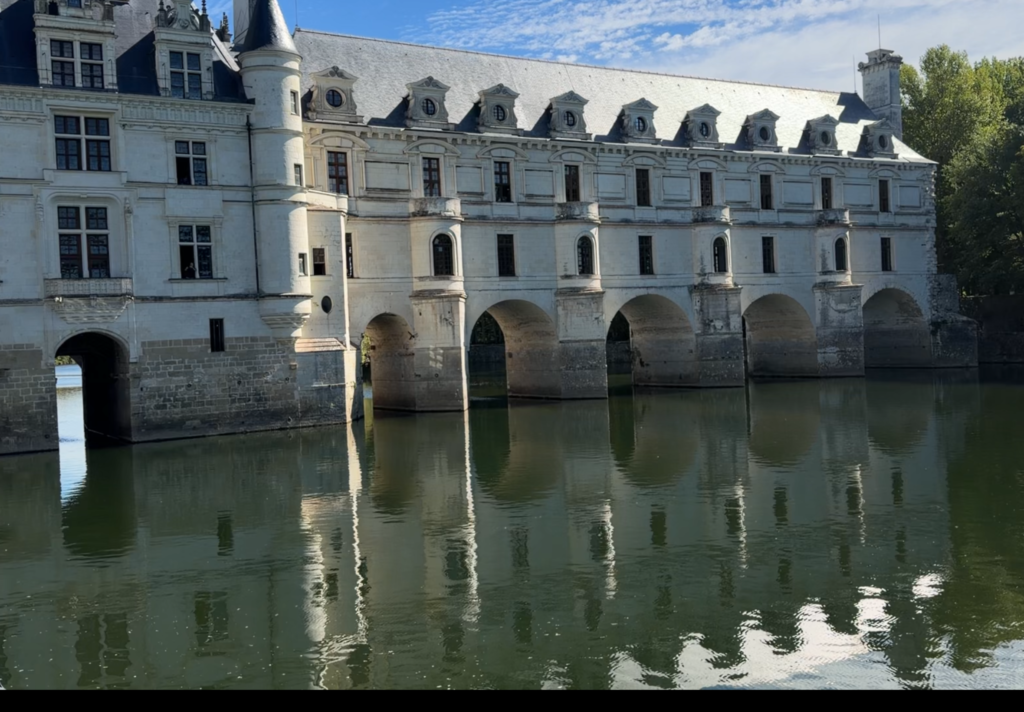
The plan for day two of our stay in Blois was to visit three of the Chateaus in the countryside each roughly twenty-five miles from our base in Blois. We drove south through nearby Amboise along the Loire River before heading east to the first chateau, Chenonceau. One of the most visited chateaus of the area, Chateaus Chennonceau was built over the Cher River. The building replaced a wooden mill on the river that had burned to the ground around 1540. Sometimes known as the Chateau of the Dames, its primary occupants were women, including the original occupant, Diane du Poitiers, the mistress of the castle.
After King Henry II died his widow, the strong willed Catherine de’Medici made this her full time residence and she set about establishing the elaborate formal gardens surrounding the chateau. She extended the original castle with a formal large “gallery hall” over the river which became the site of lavish parties and spectacles. This gallery would much later play a part in World War II. The Cher River, over which the chateau was built, was the boundary between Nazi occupied France to the north and west and the so called “free” Vichy but Nazi controlled zone on the other side of the river. The Gallery was used as a hospital and also as a passageway from Nazi occupied territory to freedom in southern France. The chateau would later be occupied by several prominent women including the mistress of Henri IV Gabrielle d’Estrees. After the French Revolution at the end of the eighteenth century the chateau fell into disrepair but after the flood of 1951, the Menier family obtained the properties and restored the gardens and chateau to its current original state.
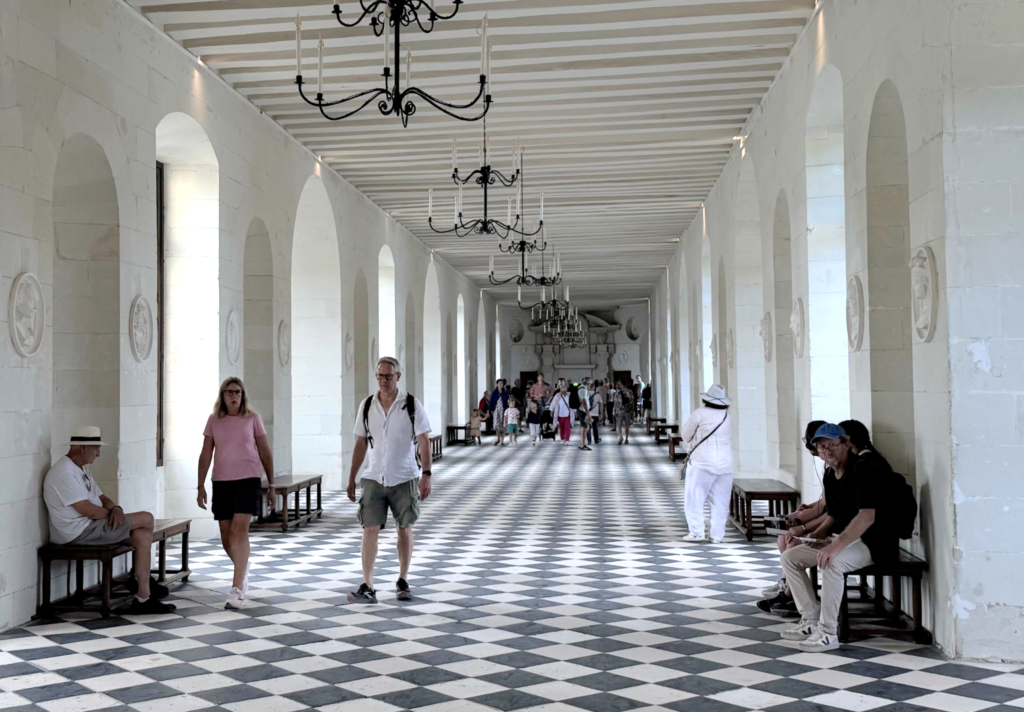
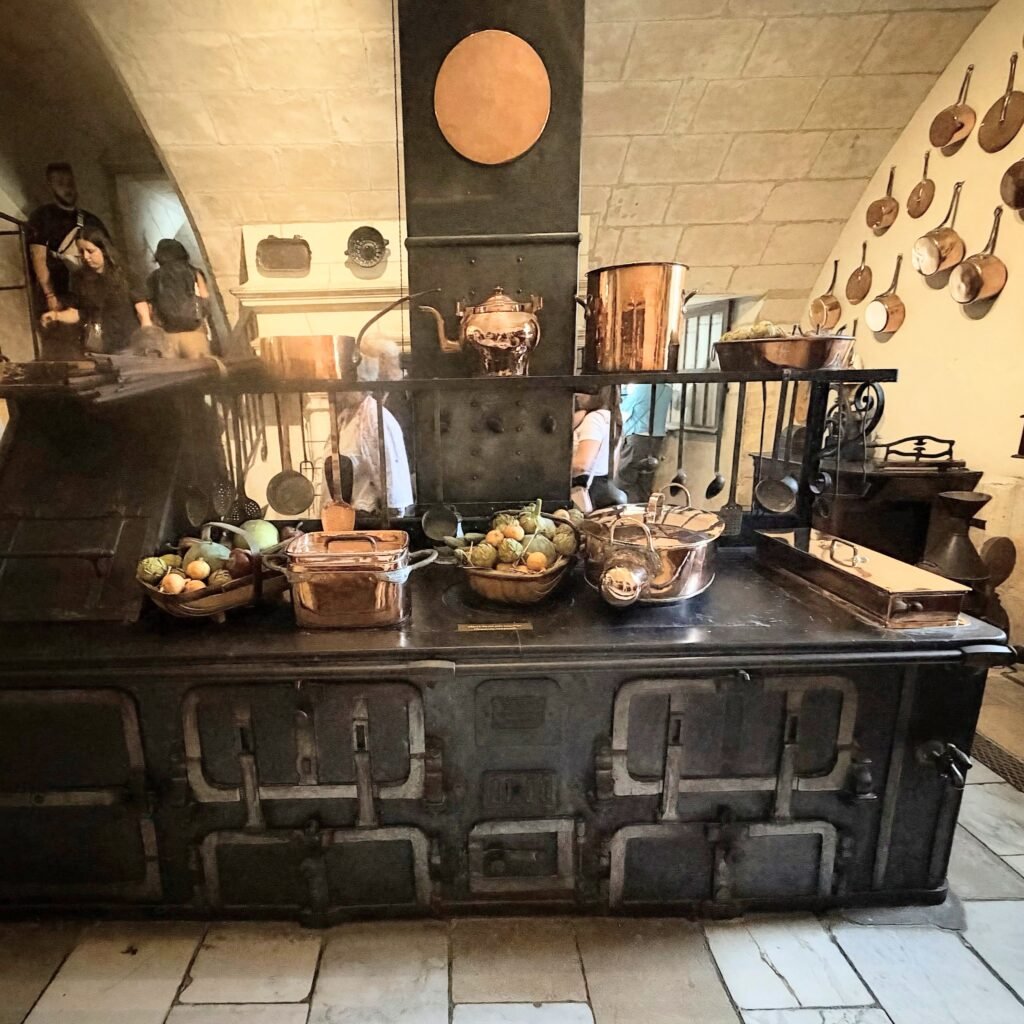
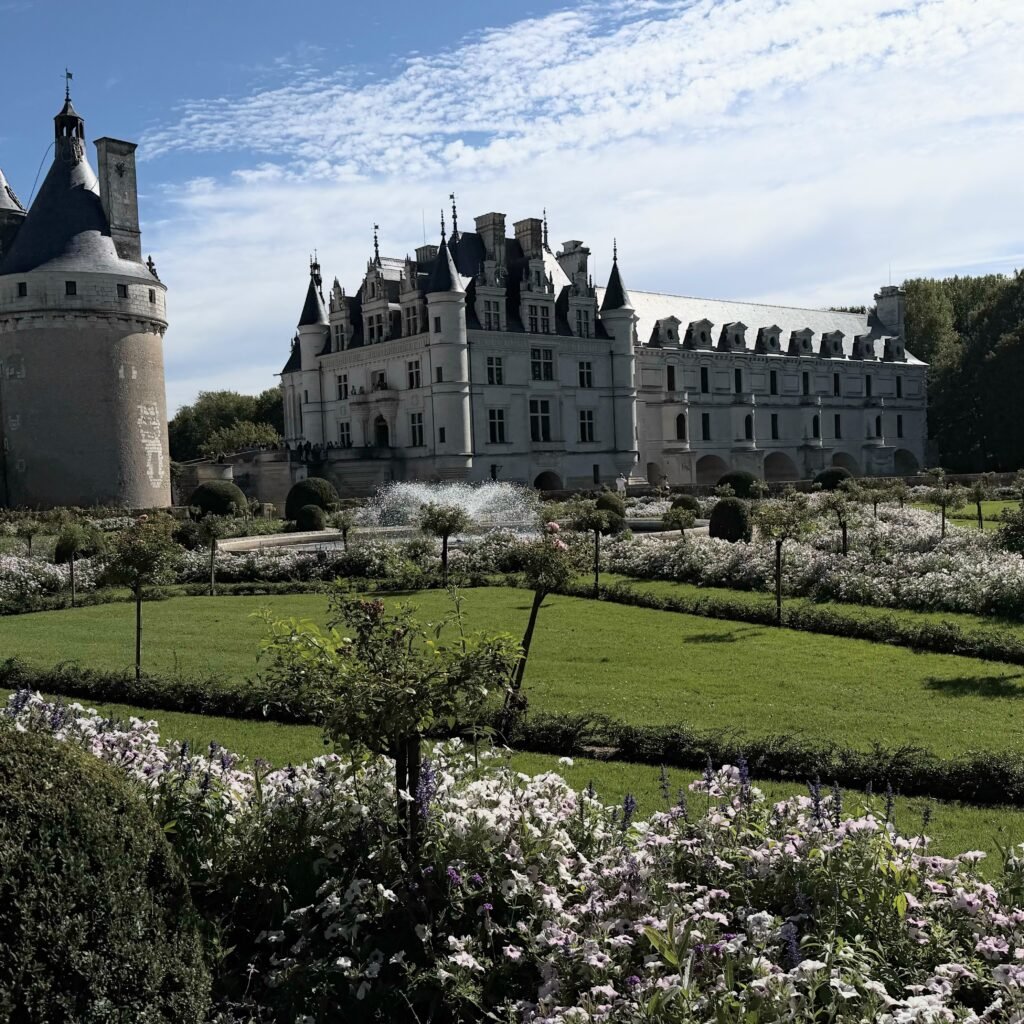
After driving through the countryside we turned onto the tree lined entrance way and parked. I had prepaid our fee and we made our way onto the grounds. The interior was furnished with replicas of the early period and was well done. The downstairs kitchen was interesting with a stone oven, large fireplaces for preparing rotisserie meat and game and different rooms for butchery, baking and storage. The kings and noblemen who spent their summers in the valley did not leave the chateaus furnished. When they came to visit they brought the furniture, and all belongings in a long procession to set up for the season. After the season ended, everything was packed up and returned to the castles and residences of Paris.
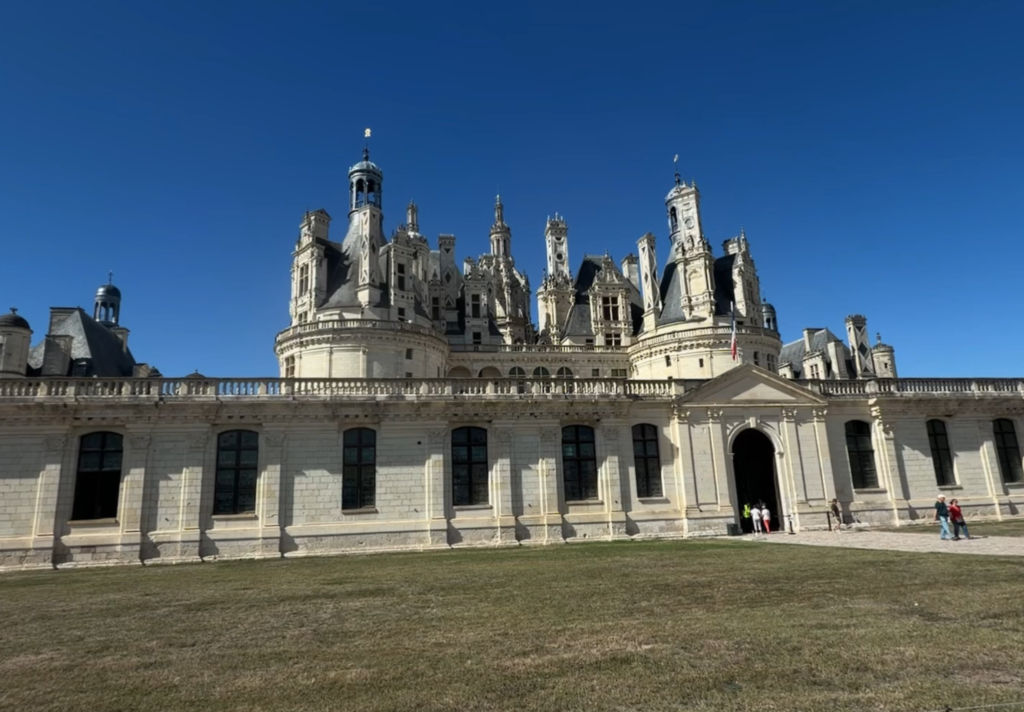
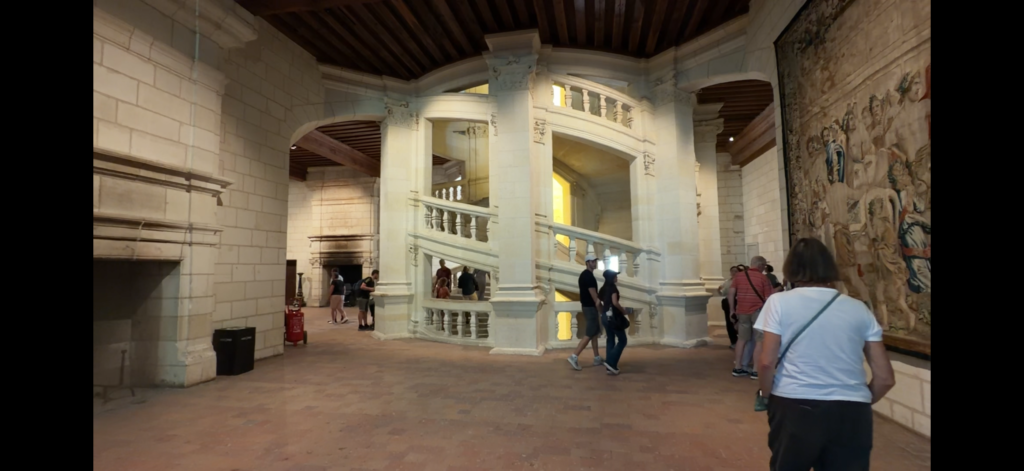
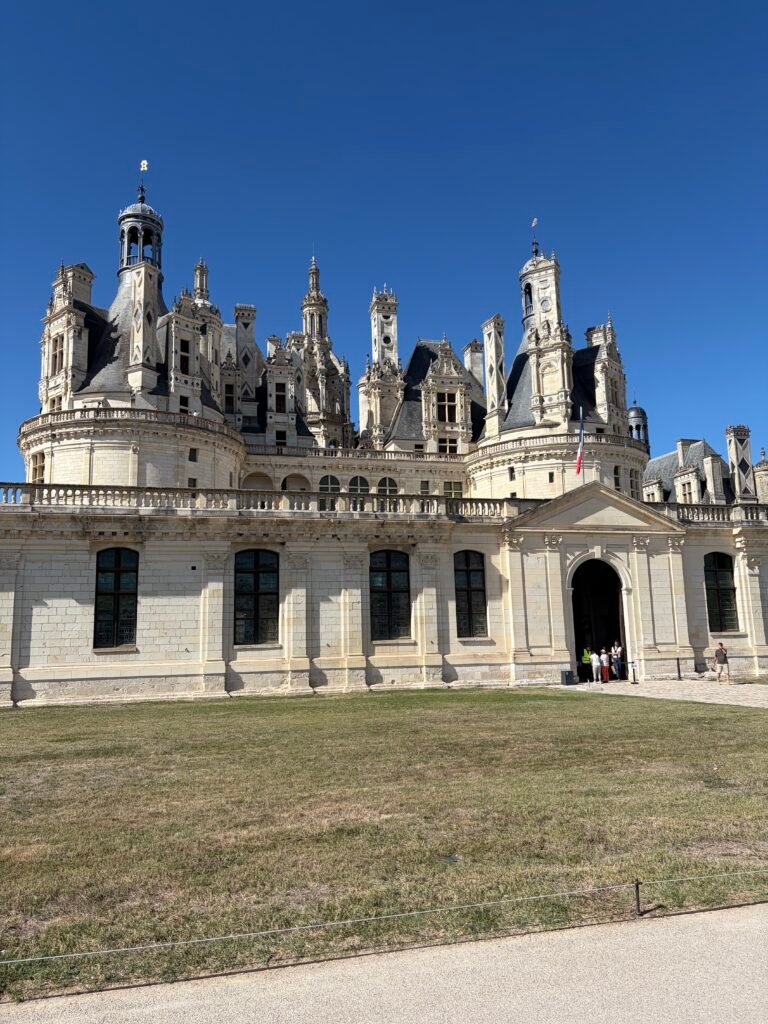
After this visit we decide to skip the second chateau on my list and proceed through the countryside to our final destination Chateau du Chambord. This is the largest and most elaborate chateau in the region. Built by King Louis I, during the French renaissance period, the chateau is massive. The King hired Italian architects to add numerous elevated spires to elevate the structure. After parking, we walked to the entrance through numerous shops and cafes where we had lunch. Inside there is a large dual staircase, rumored to be designed in part by Leonardo da Vinci who resided in the area in his later years. We each ascended a different staircase and were able to see each other at viewpoints on the way up the long, long climb to the top. Visitors are able to stroll along the rooftop around the chateau and view the grounds an gardens that surround it. While the building is huge spectacle the interior is sparsely furnished and not nearly as interesting as the Chateau du Chennonceau. The gardens are not at all interesting but seeing the structure made it worthwhile.
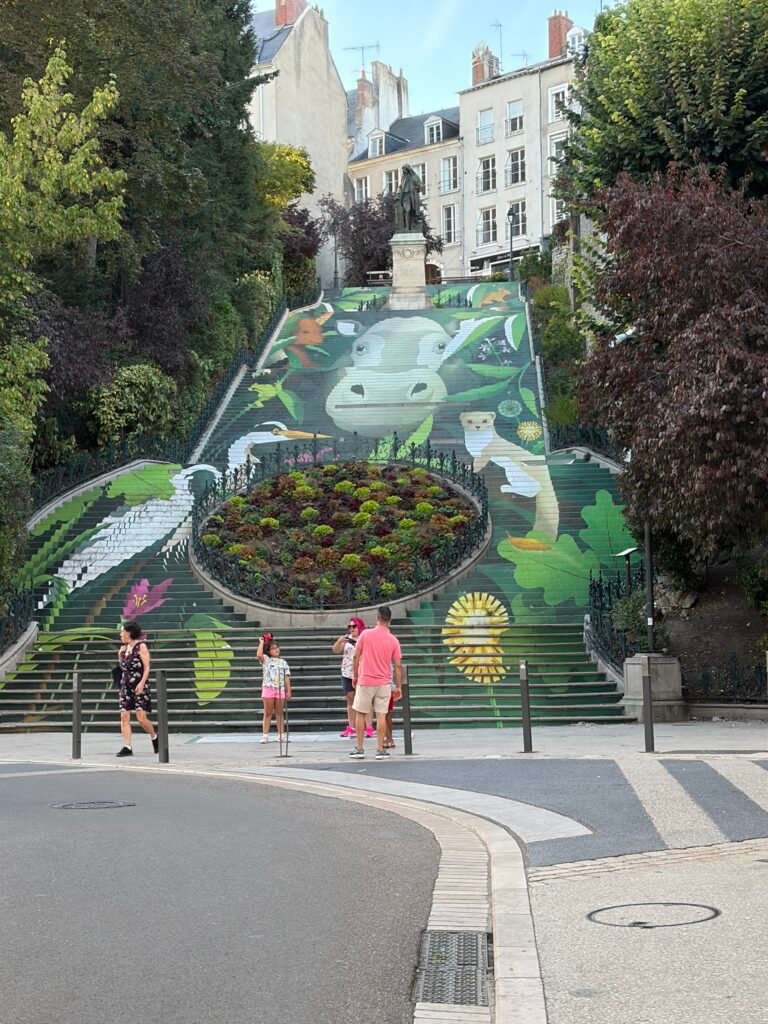
Back in the Salt Attic we rested briefly then set out to find a place for dinner. We strolled through the village and found the famous long stairway which is an attraction, each step is artfully painted so that from the ground a single work of art can be seen when approaching the stairs. Eventually, we found a brasserie where I was delighted to see that they had a roasted suckling pig on the menu, of course they were sold out of it so I ordered a “veal head” plat that turned out to be the worst meal I have ever had in my entire life. I’m not sure what I was thinking when I ordered a veal head. The “meat” was smothered in a thick mustard sauce so as to conceal the abundance of fat and gristle. I picked over it as best I could then had it removed so I might enjoy my wine without the sight in front of me. Janet had a nice roasted chicken with vegetables and she mercifully shared a few bites with me. Janet ordered an ice cream dessert and I got a chocolate tart with ice cream and whipped cream which helped displace the memory of my entree. We walked the short distance back to our salt attic for the night.